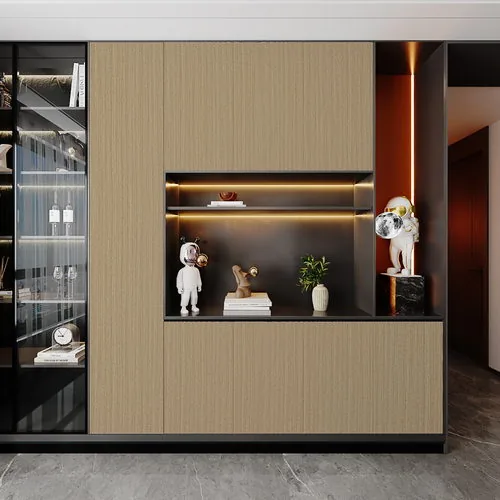
Oak
Light oak veneer
Warm natural oak brings Scandinavian-inspired lightness to open-plan kitchens.
Wood veneer cabinets · Real timber face
The natural beauty of real wood at a sensible price: Luxfit wood veneer cabinets bring genuine timber character to your kitchen with the stability of a modern engineered board. Wood veneer is a thin slice of real timber bonded to a stable substrate, so every door shows its own natural grain.
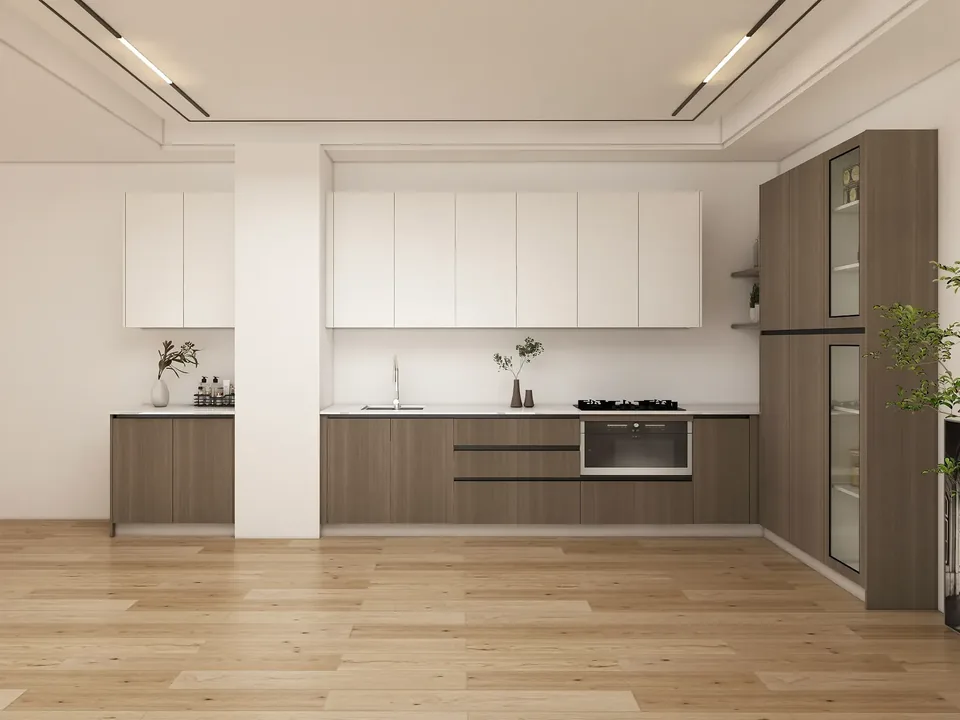
Why wood veneer
Real timber veneer gives every door authentic grain patterns and natural colour variation.
The engineered substrate avoids timber’s biggest problems (warping, cracking and seasonal movement), keeping doors true.
The premium look of real timber at a lower cost than solid timber construction.
Veneer can be lightly sanded and re-oiled or restained to refresh the look.
Species such as oak, walnut, ash, cherry, maple and teak, in several stain tones.
Veneer uses far less timber than solid timber construction.
Veneer styles
Every veneer kitchen is unique. The visuals below show the tone; real veneer has natural grain variation, so compare the physical samples at our showroom.
Oak
Warm natural oak brings Scandinavian-inspired lightness to open-plan kitchens.
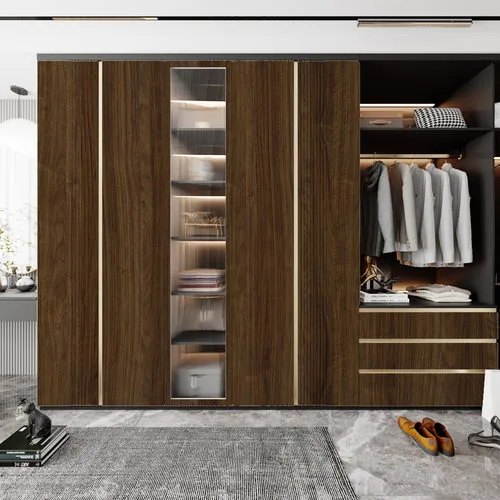
Walnut
Deep, rich walnut creates a luxurious, sophisticated atmosphere.
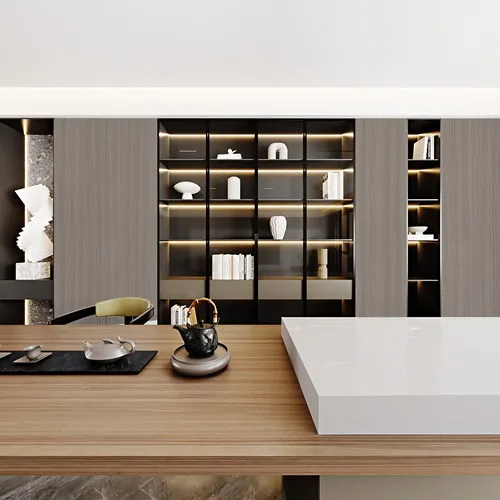
Smoked oak
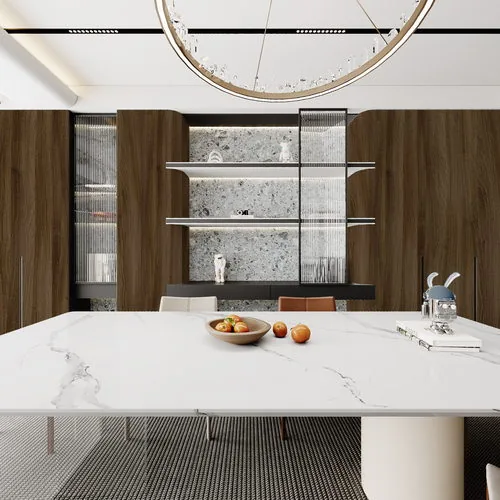
Smoked or limed oak with stone-look tops: a contemporary luxury pairing.
Warm wood
Warm tones with a natural oil finish for a timeless, welcoming kitchen.
Specification
Cabinet quality control system
Every Luxfit order goes through one quality system, run by Luxfit and our manufacturing partners. Your confirmed drawings feed the production system directly, every panel is labelled and tracked from cutting to packing, and checks are built into each stage rather than left to the end.
Our technical team measures on site. Production only starts after you approve the 2D drawings and 3D mock-ups.
Boards, edge banding and finishes are checked against your specification (board grade, E0 or E1, and finish code) before cutting.
Production data goes straight from your drawings to the CNC line. Panels are cut to 0.1 mm tolerance and each one gets a QR-coded label.
Each panel is scanned before drilling, so holes follow the drawing and a wrong size or position is flagged. Sorting confirms no part is missing.
Inspectors check panel sizes, edge banding, colour and drill positions, then clean every panel so no dust remains before packing.
Hinges, runners and fittings are picked by type and quantity for your order, then scanned and photo-checked.
Packages are scanned to confirm quantities, clearly labelled and tracked in the warehouse until loading.
After shipping and Uganda clearance, our team fits your cabinets on site to your confirmed drawings.
Testing standards
Board grades, finish codes and hardware are confirmed on your quotation.
Premium cabinets quality assurance
We work with established manufacturing and hardware partners and specify each component by use. The options below are confirmed on your quotation.
Partner factory
CNC cutting, edge banding and drilling on an automated line, for consistent quality and efficient production.
Hardware partner
Our premium hardware option: smooth, quiet soft-close movement for doors and drawers.
Hardware partner
Our standard soft-closing hinges for base units, wall units and tall doors.
Storage fittings
Pull-out baskets, organiser drawers and soft-close waste sorters (including HIGOLD) in SUS304 stainless steel and nano-coated aluminium.
Finish
L-code lacquer is sprayed in layers and oven-baked, like the paint on premium cars, for a smooth, deep, durable colour.
Boards
E0 particle board, E1 11-layer plywood and ENF-grade flagship boards, bonded with MDI adhesive.
How it works
Payment follows 10% before 2D/3D → 40% before production → 40% before Uganda clearance → 10% after fitting. Full stages are in our guide to lead time for Kampala kitchens and wardrobes.
Send your inquiry with a floor plan or photos to our sales team.
Our technical team measures on site so the drawings match the real space.
After the 10% design deposit you receive 2D drawings and 3D mock-ups, with three revisions included.
You confirm the design and pay 40% before production. Production takes about 20–40 days.
Shipping takes about 28–40 days. 40% is due before Uganda clearance.
Our team fits your cabinets on site. The final 10% is paid after fitting.
Explore
FAQ
Wood veneer uses real, thin slices of timber, giving authentic grain patterns unique to each door. Melamine uses a printed paper surface that mimics wood. Veneer is warmer, more natural and can be refinished; melamine is harder, easier to maintain and more affordable.
Veneer offers a similar look at a lower cost and is more dimensionally stable: solid timber expands and contracts with humidity, while veneer on an engineered substrate stays flat and true. It also uses far less timber per cabinet.
With proper care, veneer cabinets last for many years. The engineered substrate keeps them structurally stable, and the surface can be refreshed by refinishing.
Yes. Veneer can be lightly sanded and restained or re-oiled to refresh the look. Care is needed not to sand through the thin veneer layer, so professional refinishing is recommended.
Species such as oak, walnut, ash, cherry, maple and teak, each in several stain tones. The species and tone for your kitchen are confirmed on your quotation; compare samples at our showroom.
After you confirm the drawings, production takes about 20–40 days and shipping about 28–40 days, followed by Uganda clearance and fitting on site. Payment is 10% before the 2D and 3D drawings, 40% before production, 40% before Uganda clearance and 10% after fitting.
Start your project
Get a design consultation and quote from Luxfit. We help you choose the species, match the grain and plan a kitchen built to last.
Showroom
See cores, finishes and tall samples in person.
Wood veneer cabinets · Real timber face
The natural beauty of real wood at a sensible price: Luxfit wood veneer cabinets bring genuine timber character to your kitchen with the stability of a modern engineered board. Wood veneer is a thin slice of real timber bonded to a stable substrate, so every door shows its own natural grain.
Why wood veneer
Real timber veneer gives every door authentic grain patterns and natural colour variation.
The engineered substrate avoids timber’s biggest problems (warping, cracking and seasonal movement), keeping doors true.
The premium look of real timber at a lower cost than solid timber construction.
Veneer can be lightly sanded and re-oiled or restained to refresh the look.
Species such as oak, walnut, ash, cherry, maple and teak, in several stain tones.
Veneer uses far less timber than solid timber construction.
Veneer styles
Every veneer kitchen is unique. The visuals below show the tone; real veneer has natural grain variation, so compare the physical samples at our showroom.
Oak
Warm natural oak brings Scandinavian-inspired lightness to open-plan kitchens.
Walnut
Deep, rich walnut creates a luxurious, sophisticated atmosphere.
Smoked oak
Smoked or limed oak with stone-look tops: a contemporary luxury pairing.
Warm wood
Warm tones with a natural oil finish for a timeless, welcoming kitchen.
Specification
Cabinet quality control system
Every Luxfit order goes through one quality system, run by Luxfit and our manufacturing partners. Your confirmed drawings feed the production system directly, every panel is labelled and tracked from cutting to packing, and checks are built into each stage rather than left to the end.
Our technical team measures on site. Production only starts after you approve the 2D drawings and 3D mock-ups.
Boards, edge banding and finishes are checked against your specification (board grade, E0 or E1, and finish code) before cutting.
Production data goes straight from your drawings to the CNC line. Panels are cut to 0.1 mm tolerance and each one gets a QR-coded label.
Each panel is scanned before drilling, so holes follow the drawing and a wrong size or position is flagged. Sorting confirms no part is missing.
Inspectors check panel sizes, edge banding, colour and drill positions, then clean every panel so no dust remains before packing.
Hinges, runners and fittings are picked by type and quantity for your order, then scanned and photo-checked.
Packages are scanned to confirm quantities, clearly labelled and tracked in the warehouse until loading.
After shipping and Uganda clearance, our team fits your cabinets on site to your confirmed drawings.
Testing standards
Board grades, finish codes and hardware are confirmed on your quotation.
Premium cabinets quality assurance
We work with established manufacturing and hardware partners and specify each component by use. The options below are confirmed on your quotation.
Partner factory
CNC cutting, edge banding and drilling on an automated line, for consistent quality and efficient production.
Hardware partner
Our premium hardware option: smooth, quiet soft-close movement for doors and drawers.
Hardware partner
Our standard soft-closing hinges for base units, wall units and tall doors.
Storage fittings
Pull-out baskets, organiser drawers and soft-close waste sorters (including HIGOLD) in SUS304 stainless steel and nano-coated aluminium.
Finish
L-code lacquer is sprayed in layers and oven-baked, like the paint on premium cars, for a smooth, deep, durable colour.
Boards
E0 particle board, E1 11-layer plywood and ENF-grade flagship boards, bonded with MDI adhesive.
How it works
Payment follows 10% before 2D/3D → 40% before production → 40% before Uganda clearance → 10% after fitting. Full stages are in our guide to lead time for Kampala kitchens and wardrobes.
Send your inquiry with a floor plan or photos to our sales team.
Our technical team measures on site so the drawings match the real space.
After the 10% design deposit you receive 2D drawings and 3D mock-ups, with three revisions included.
You confirm the design and pay 40% before production. Production takes about 20–40 days.
Shipping takes about 28–40 days. 40% is due before Uganda clearance.
Our team fits your cabinets on site. The final 10% is paid after fitting.
Explore
FAQ
Wood veneer uses real, thin slices of timber, giving authentic grain patterns unique to each door. Melamine uses a printed paper surface that mimics wood. Veneer is warmer, more natural and can be refinished; melamine is harder, easier to maintain and more affordable.
Veneer offers a similar look at a lower cost and is more dimensionally stable: solid timber expands and contracts with humidity, while veneer on an engineered substrate stays flat and true. It also uses far less timber per cabinet.
With proper care, veneer cabinets last for many years. The engineered substrate keeps them structurally stable, and the surface can be refreshed by refinishing.
Yes. Veneer can be lightly sanded and restained or re-oiled to refresh the look. Care is needed not to sand through the thin veneer layer, so professional refinishing is recommended.
Species such as oak, walnut, ash, cherry, maple and teak, each in several stain tones. The species and tone for your kitchen are confirmed on your quotation; compare samples at our showroom.
After you confirm the drawings, production takes about 20–40 days and shipping about 28–40 days, followed by Uganda clearance and fitting on site. Payment is 10% before the 2D and 3D drawings, 40% before production, 40% before Uganda clearance and 10% after fitting.
Start your project
Get a design consultation and quote from Luxfit. We help you choose the species, match the grain and plan a kitchen built to last.
Showroom
See cores, finishes and tall samples in person.